

What are CMMS KPIs and How to Track Key Metrics
In today’s competitive business environment, maintaining equipment reliability and minimizing downtime are critical for success. That’s where CMMS KPIs (Computerized Maintenance Management System Key Performance Indicators) come into play. These benchmarks help organizations measure maintenance efficiency, reduce costs, and improve asset performance.
If you are a maintenance manager, facility director, or part of an operations team, knowing CMMS KPIs is key. This knowledge helps you reach top maintenance practices.
Understanding CMMS and Its Role in Maintenance Management
Definition of CMMS Software
A Computerized Maintenance Management System (CMMS) is a digital platform that centralizes all maintenance activities, from scheduling preventive tasks to tracking asset history. CMMS software enables teams to streamline workflows, track equipment performance, and generate actionable insights through data-driven reporting.
Importance of CMMS in Asset Management
Without CMMS, organizations often use spreadsheets or paper to track work. This can cause missed work orders, more downtime, and unexpected costs. With CMMS, businesses can:

Key Performance Indicators (KPIs) Explained
What Are Key Performance Indicators?
Key Performance Indicators (KPIs) are measurable values that help organizations determine if they are meeting specific maintenance goals. For example:
KPIs turn broad objectives into measurable targets that guide continuous improvement.
Types of KPIs Relevant to CMMS
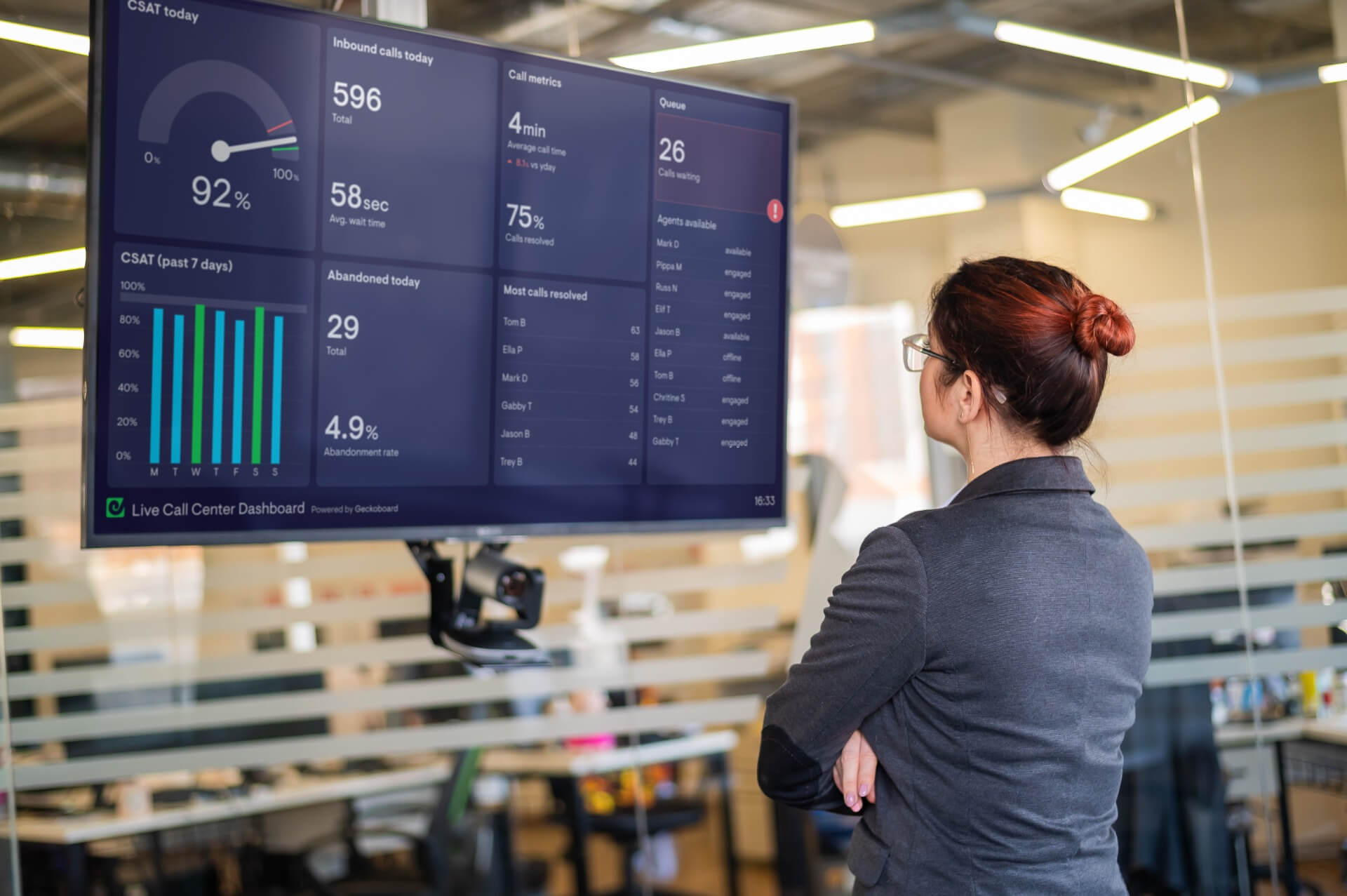
Core CMMS KPIs to Monitor
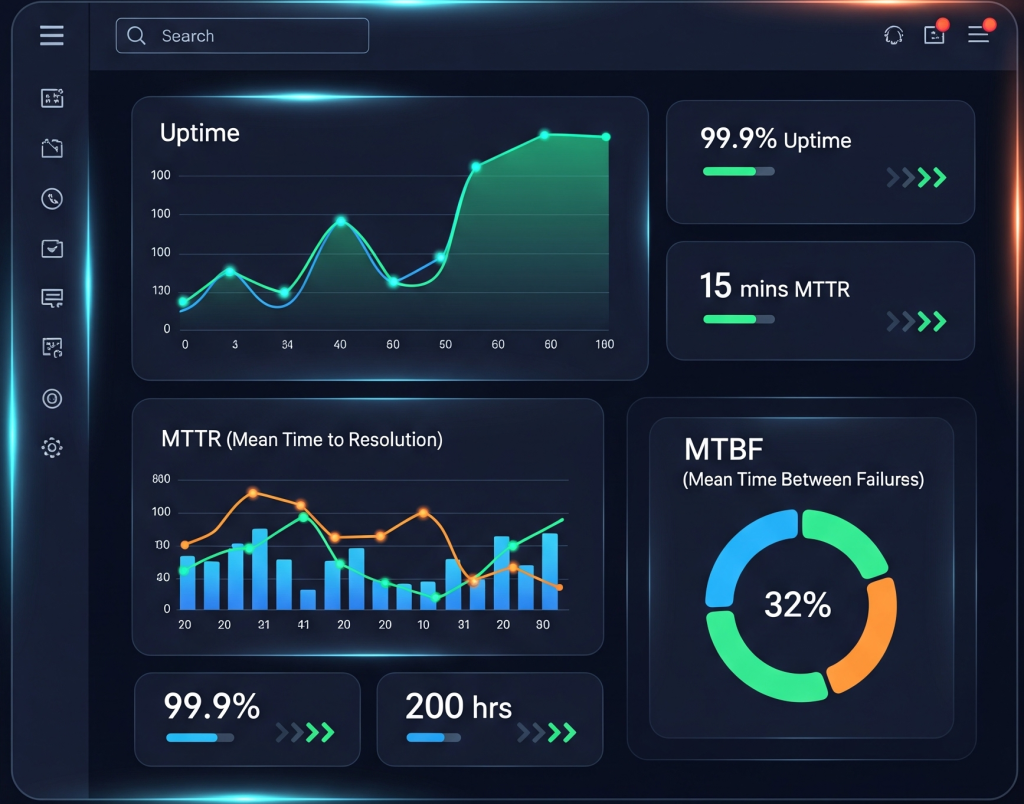
Definition: Average time equipment operates before a failure occurs. Why It Matters: A higher MTBF means greater reliability and fewer unexpected breakdowns.
Definition: Average time taken to restore equipment after a failure. Why It Matters: Lower MTTR shows efficiency of maintenance teams and faster return to production.
Definition: Overall cost of preventive, predictive, and corrective maintenance. Why It Matters: Tracking TMC helps evaluate budget efficiency and compare costs against equipment replacement value.
OEE (Overall Equipment Effectiveness) combines availability, performance, and quality. Helps identify whether assets are performing at their full potential.
Operational Efficiency Metrics are performance indicators that measure how effectively an organization utilizes its resources, such as labor, equipment, and time, to deliver maximum output with minimal waste. These metrics help identify bottlenecks, improve workflows, reduce downtime, and ensure maintenance teams achieve higher productivity at lower costs.
Monitoring both planned and unplanned downtime helps organizations pinpoint exactly where productivity losses occur. By analyzing downtime trends, maintenance teams can determine whether breakdowns are due to equipment failure, lack of preventive care, or external factors. This insight guides corrective actions, reduces unexpected shutdowns, and improves overall reliability.
Uptime tracking directly measures equipment availability and reliability, making it one of the most critical metrics for production-heavy industries. A higher uptime percentage means assets are running as expected with minimal interruptions. Regularly tracking uptime allows maintenance managers to benchmark performance, reduce bottlenecks, and ensure smooth production flow.
Resource allocation metrics track labor hours, contractor usage, and cost per work order to ensure resources are deployed efficiently. These metrics help identify overworked teams, underutilized staff, or excessive outsourcing costs. By balancing workload and optimizing costs, organizations can achieve better maintenance efficiency and maximize return on investment.
What are fleet management KPIs?
Fleet management KPIs are key performance indicators that measure efficiency, control costs, and enhance safety across a fleet. When aligned with business goals, these KPIs allow managers to make smarter, data-driven decisions that improve asset utilization, minimize downtime, and maintain compliance.
Top 6 Fleet Management KPIs to Track
Why It Matters
How to Track Maintenance KPIs with a CMMS
IDS Tech CMMS software delivers advanced reporting and analytics features. With visual dashboards such as graphs and charts, organizations can easily monitor key maintenance KPIs and evaluate performance against measurable benchmarks.
Tracking individual KPIs is essential for maintenance teams because it helps them assess whether their strategies are producing tangible, positive, and measurable outcomes for the business.
Tracking individual KPIs is essential for maintenance teams because it helps them assess whether their strategies are producing tangible, positive, and measurable outcomes for the business.
Maintenance KPI Examples with IDS Tech
Using IDS Tech’s Modern CMMS software includes built-in dashboards and reporting features that visualize KPIs in real time. These tools transform raw data into insights, making it easier for teams to take corrective action.
A notable success story comes from IDS Tech’s CMMS implementation at ABB Bulgaria, a manufacturing plant with more than 1,200 employees. The company faced challenges such as rising maintenance costs and unplanned downtime due to poorly organized processes. By deploying IDS Tech’s tailored CMMS solution—including upgrades like QR code scanner integration—the plant streamlined its operations.
As a result, productivity increased, data analysis became faster, employees gained mobile system access with real-time updates, and emergency cases were reduced by 15%.
Utilizing Data for Informed Decision Making
Conclusion
Although there are numerous maintenance department KPI examples, the 11 mentioned in this article are considerably worthwhile for monitoring.
When you define your KPIs, measuring team performance against these benchmarks is an excellent way of keeping maintenance crews accountable while ensuring less downtime and fewer unnecessary costs.
Evaluating against pre-established standards enables continuous improvement. This can be achieved by using CMMS systems to enhance performance through accurate tracking.
The Benefits of Monitoring CMMS KPIs
Partner with IDS
Tracking CMMS KPIs is the foundation of stronger maintenance strategies, reduced downtime, and long-term cost savings. But the right results depend on having the right system in place.
By partnering with IDS Tech, your organization gains access to a modern, user-friendly CMMS built to simplify KPI tracking and reporting. From monitoring MTBF, MTTR, downtime, uptime, and equipment performance to generating real-time dashboards, IDS Tech empowers your team with the data they need to improve reliability, efficiency, and compliance.
Our experts specialize in healthcare, manufacturing, and enterprise maintenance solutions, ensuring your CMMS implementation is customized to your goals. Whether your focus is reducing costs, extending asset life, or optimizing technician productivity, IDS Tech helps transform your maintenance operations with measurable outcomes.
Need expert support? 👉
Frequently Asked Questions on CMMS KPIs
CMMS KPIs (Computerized Maintenance Management System Key Performance Indicators) are measurable benchmarks used to track maintenance performance. They help organizations monitor metrics like downtime, repair efficiency, and overall equipment effectiveness
CMMS KPIs are important because they provide visibility into maintenance operations, reduce unexpected failures, cut costs, and improve asset reliability. They turn maintenance goals into measurable results.
Common CMMS KPIs include:
- Mean Time Between Failures (MTBF)
- Mean Time to Repair (MTTR)
- Preventive Maintenance Compliance
- Equipment Uptime and Downtime
- Total Maintenance Costs
You can track CMMS KPIs using maintenance management software with dashboards and reporting tools. A CMMS automatically collects data on work orders, equipment history, and downtime, then presents insights through reports.
Maintenance metrics are raw data points (like downtime hours), while KPIs are targets tied to goals (like reducing downtime by 20%). In short, metrics provide the data, and KPIs measure success against objectives.
Yes. CMMS software makes KPI tracking easier by automating data collection, scheduling preventive maintenance, and generating performance reports that help managers make data-driven decisions.